What Makes Food Good for a French Bulldog Puppy: The Nutrition Basics
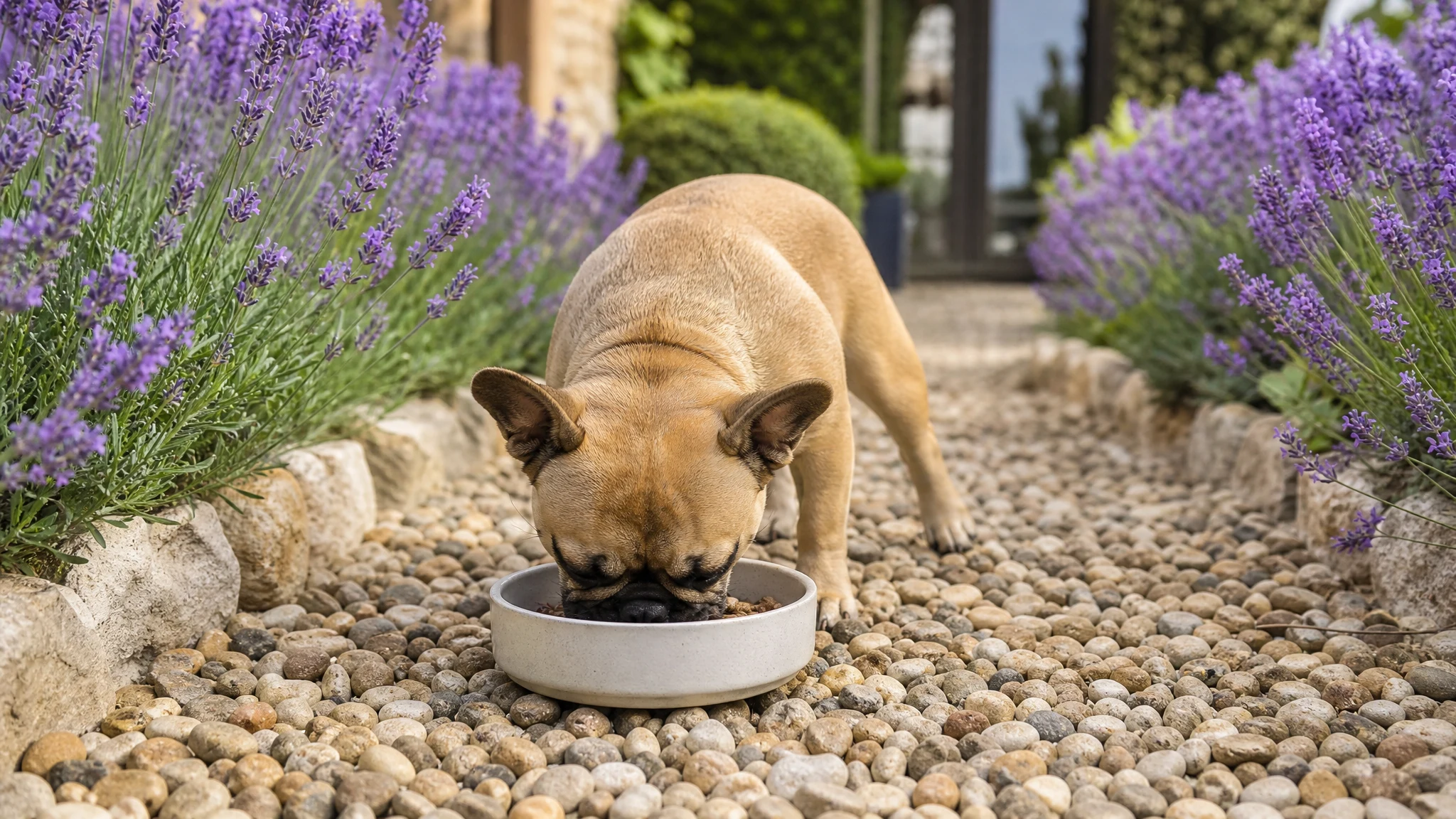
General nutrition information compiled from product labels and published sources, not veterinary advice. Your veterinarian is the right person to choose a diet for your dog, especially one with a health condition.
Every bag of puppy food promises a lot. The label usually says less. This guide shows you how to read it, so you can judge the best food for french bulldog puppy feeding on facts rather than front-of-bag claims.
A note on method: we compared label data published by the brands and by breed sources. We did not run feeding trials or taste tests, and we are not ranking foods. The goal is a repeatable way to check any puppy food, with a few real labels as examples.
What you need before you start
- The bag or can of any food you are considering, or its brand product page
- Your puppy's age and current weight
- A kitchen scale that reads in grams or ounces, plus a standard measuring cup
- A notebook or phone note for weight, meals and stool changes
- Your veterinarian's contact details, since they make the final call for your individual dog
Step 1: Know the dog you are feeding
Good food starts with the breed. The French Bull Dog Club of America breed standard says a French Bulldog should not exceed 28 pounds. Royal Canin's breed library lists adult males at 20 to 28 pounds and females at 17 to 24 pounds.
That is a small dog, but a stocky one. Royal Canin's life-stage table treats a French Bulldog as a puppy from 2 to 12 months and an adult from 12 months. Plan on growth-stage food for roughly that first year, and ask your veterinarian when to switch.
Royal Canin also notes that the flat-faced build brings respiratory problems and that dogs with brachycephalic airway obstruction often show gastrointestinal signs too. It warns that the breed gains weight easily. Royal Veterinary College VetCompass research lists skin fold dermatitis among the breed's predispositions. None of this means a food can fix a problem. It means you should watch weight, digestion and skin closely, and report changes to your veterinarian.
To see what a typical puppy weighs at each age, use our French Bulldog puppy growth chart by month.
Step 2: Find the nutritional adequacy statement
This is the most important sentence on the package. Look for wording like "formulated to meet the nutritional levels established by the AAFCO Dog Food Nutrient Profiles" for growth, or for all life stages. Some foods instead say that animal feeding tests using AAFCO procedures substantiate complete and balanced nutrition for growing puppies.
Both are legitimate ways to support a "complete and balanced" claim. They are different methods, and neither tells you how a particular dog will do. A statement that mentions only "adult maintenance" is not suitable for a puppy.
Real examples from brand pages:
- The Royal Canin Breed Health Nutrition French Bulldog Puppy dry food states it is formulated to meet AAFCO profiles for growth, including growth of large size dogs.
- Victor Hi-Pro Plus Small & Medium Breed Puppy states it meets AAFCO profiles for all life stages, except for growth of large size dogs.
- Hill's Science Diet Puppy Chicken & Brown Rice states that AAFCO feeding tests substantiate complete and balanced nutrition for growing puppies.
Step 3: Make sense of the large-size growth wording
Since 2016, according to Whole Dog Journal's explanation of the AAFCO rule, growth and all-life-stages labels must say either "including growth of large-size dogs (70 pounds or more as an adult)" or "except for growth of large-size dogs." Foods with the "including" wording meet the lower calcium limits meant for large dogs. Too much calcium can contribute to bone and joint abnormalities in large-breed puppies.
Here is the good news for this breed. The 70-pound line is far above the 28-pound breed standard cap. An "except for growth of large-size dogs" label is not a problem for a French Bulldog puppy, and a large-breed puppy formula is not needed. Do not pay extra for large-breed marketing.
Step 4: Read the ingredient list with a skeptical eye
Ingredients are listed by weight before cooking, so the first five tell you the most. Here is what a few labels show:
- Royal Canin French Bulldog Puppy: brewers rice, chicken by-product meal, wheat, chicken fat, chicken meal
- Hill's Science Diet Puppy Chicken & Brown Rice: chicken, brown rice, whole grain wheat, chicken meal, chicken fat
- Victor Hi-Pro Plus Small & Medium Breed Puppy: beef, chicken, beef meal, chicken meal, whole grain sorghum
- Freshpet Multi-Protein Puppy Recipe: chicken, eggs, beef, beef liver, green beans
Two cautions. First, "meal" and "by-product meal" are not automatically bad or good. They are concentrated ingredients, and what matters is whether the finished food meets the nutrient profile. Second, fresh meats such as "chicken" contain a lot of water, so they can sit high on the list without making up most of the dry food.
None of the foods above is grain free except the Freshpet Vital Puppy roll, which the brand markets as grain free. The FDA has investigated a potential link between certain diets and canine dilated cardiomyopathy (DCM). Its latest public update is dated 12/23/2022, and the agency says it will not publish more until there is meaningful new scientific information. If you are weighing a grain-free or boutique diet, ask your veterinarian about it. Do not decide from headlines.
Step 5: Compare the guaranteed analysis fairly
The guaranteed analysis lists minimum protein and fat and maximum fiber. Here are the published numbers for several foods:
| Food (brand page data) | Protein min | Fat min | Fiber max | Calories |
|---|---|---|---|---|
| Royal Canin French Bulldog Puppy (dry) | 28.0% | 18.0% | 3.4% | 373 kcal per cup |
| Victor Hi-Pro Plus Small & Medium Breed Puppy (dry) | 30.0% | 18.0% | 5.0% | 383 kcal per cup |
| Victor Hi-Pro Plus (dry) | 30.0% | 20.0% | 3.8% | 406 kcal per cup |
| Freshpet Multi-Protein Puppy (fresh) | 16% | 10% | 2% | 241 kcal per cup |
Hill's Science Diet pages give dry-matter averages instead of guaranteed minimums and maximums. For example, Puppy Chicken & Brown Rice lists protein 28.1% and fat 19.1% on a dry-matter basis, with 390 kcal per cup. Do not set those numbers beside the table above. Dry-matter figures remove water, and guaranteed analysis figures do not, so they measure different things.
This is also why fresh and canned foods look low on protein and fat. They hold much more water. Compare like with like, or ask the brand for a dry-matter conversion.
One more point: higher protein is not automatically better. A label number does not show how digestible a food is or how a puppy will respond.
Step 6: Check calories and the feeding guide
Because this breed gains weight easily, calories per cup matter more than they seem to. A difference of 30 to 40 kcal per cup can add up when a puppy eats only a cup or two a day. Always measure the portion.
Feeding guides are starting points, not prescriptions. The Royal Canin French Bulldog Puppy chart, for example, is organized by puppy age (2 to 9 months) and target adult weight (18, 22 or 31 pounds). Its example for a 3-month-old with an 18-pound target is 1 1/2 cups (144 g) per day. Your puppy's appetite, activity and body condition may call for something different. Hill's pages say to adjust amounts as necessary to maintain optimal weight, and to ask your veterinarian if you are unsure.
Victor's Hi-Pro Plus page suggests feeding as much as the puppy will eat in 20 minutes, in four feedings a day. That is the brand's own method. Given this breed's tendency to gain weight, talk with your veterinarian before using free-choice or open-ended feeding.
Step 7: Consider the form and shape of the food
Dry, wet and fresh foods can all be complete for growth. Pick based on what your puppy eats well and what you can store and serve consistently.
Royal Canin describes the kibble in its French Bulldog puppy formula as curved, designed for the breed's short muzzle and underbite. That is the brand's design claim. We have not tested it, so judge for yourself whether your puppy picks up and chews the kibble comfortably. Most other brands do not publish a kibble size, so check with the brand if size matters to you.
Be careful with breed-labeled foods for other breeds. Royal Canin's Miniature Schnauzer Puppy is a small-size puppy food, but it is made for another breed. It is not a French Bulldog formula, so do not choose it on the assumption that it is.
Step 8: Introduce the food slowly and track results
- Mix a small amount of the new food into the old food.
- Increase the share of new food gradually over about a week, or on the schedule your veterinarian suggests.
- Weigh your puppy every week or two and note it in your log.
- Note stool quality, gas, itching, ear discharge and how your puppy breathes while eating.
- Share the log with your veterinarian at checkups.
Many brachycephalic dogs gulp food or have trouble eating. If your puppy snorts, gags or regurgitates at meals, tell your veterinarian instead of swapping foods repeatedly.
Tips for choosing well
- Start with the adequacy statement, then the calories, then the ingredients. Marketing words come last.
- Choose one food for a trial period instead of rotating many. It is easier to spot a problem.
- Use a scale for portions when you can. Cups vary a lot between scoops and between people.
- Count treats and chews as part of the daily food.
- Keep fresh water available, as the Hill's pages note.
- Ask the brand directly for any number missing from its page, such as kibble size or a guaranteed analysis. Do not assume it.
Common mistakes to avoid
- Buying large-breed puppy food. It is unnecessary for a dog capped at 28 pounds by the breed standard.
- Trusting the photo on the bag. Real vegetables on the front do not mean they are high on the ingredient list.
- Comparing dry-matter and as-fed numbers. The two are not interchangeable.
- Feeding to the cup line on a bowl. A puppy's needs change monthly. Revisit portions as weight changes.
- Treating a food as a fix for a health problem. Skin trouble, ear discharge and stomach upsets have many causes. Your veterinarian can find which applies. Prescription diets are something only a veterinarian prescribes.
- Switching foods abruptly. A sudden change can upset a puppy's stomach.
- Skipping the adult transition. After the puppy stage, around 12 months according to Royal Canin's table, ask your veterinarian when and how to move to adult food.
What to expect
A well-matched food may help a puppy grow at a steady pace and keep a healthy body condition. Many owners find that stools become consistent within a couple of weeks of a gradual switch. A suitable diet is only one part of the picture, and no food can promise a particular result. Growth, coat, skin and digestion all vary between individual dogs, and they depend on genetics, health and care as well as diet.
If your puppy is losing weight, gaining too fast, scratching constantly, vomiting or having ongoing loose stools, check in with your veterinarian before changing the diet again.
A short checklist for the best food for french bulldog puppy shoppers
- The label has an AAFCO statement for growth or all life stages.
- The large-size wording, "including" or "except," does not worry you, because it does not matter for this breed.
- Calories per cup are published, and you know your portion in cups or grams.
- Ingredients are clearly listed and you understand the first five.
- Your veterinarian is comfortable with the choice for your puppy.
The best food for french bulldog puppy owners is the one that meets the label standard, suits your dog's body condition and digestion, and that you can feed consistently with a veterinarian's input.
Sources
- French Bull Dog Club of America, French Bulldog Breed Standard
- French Bull Dog Club of America, health page
- Royal Canin US breed library, French Bulldog
- Royal Canin, French Bulldog Puppy Dry Dog Food
- Hill's Pet, Science Diet Puppy Chicken & Brown Rice Recipe
- Victor Pet Food, Hi-Pro Plus Small & Medium Breed Puppy
- Victor Pet Food, Hi-Pro Plus
- Freshpet, Multi-Protein Puppy Recipe
- Whole Dog Journal, In the Fine Print: Nutritional Adequacy Statements
- Royal Veterinary College, French Bulldogs: VetCompass reveals top health problems
- FDA Center for Veterinary Medicine, investigation into diets and canine dilated cardiomyopathy