French Bulldog Puppy Food Basics: Getting Started With a New Puppy
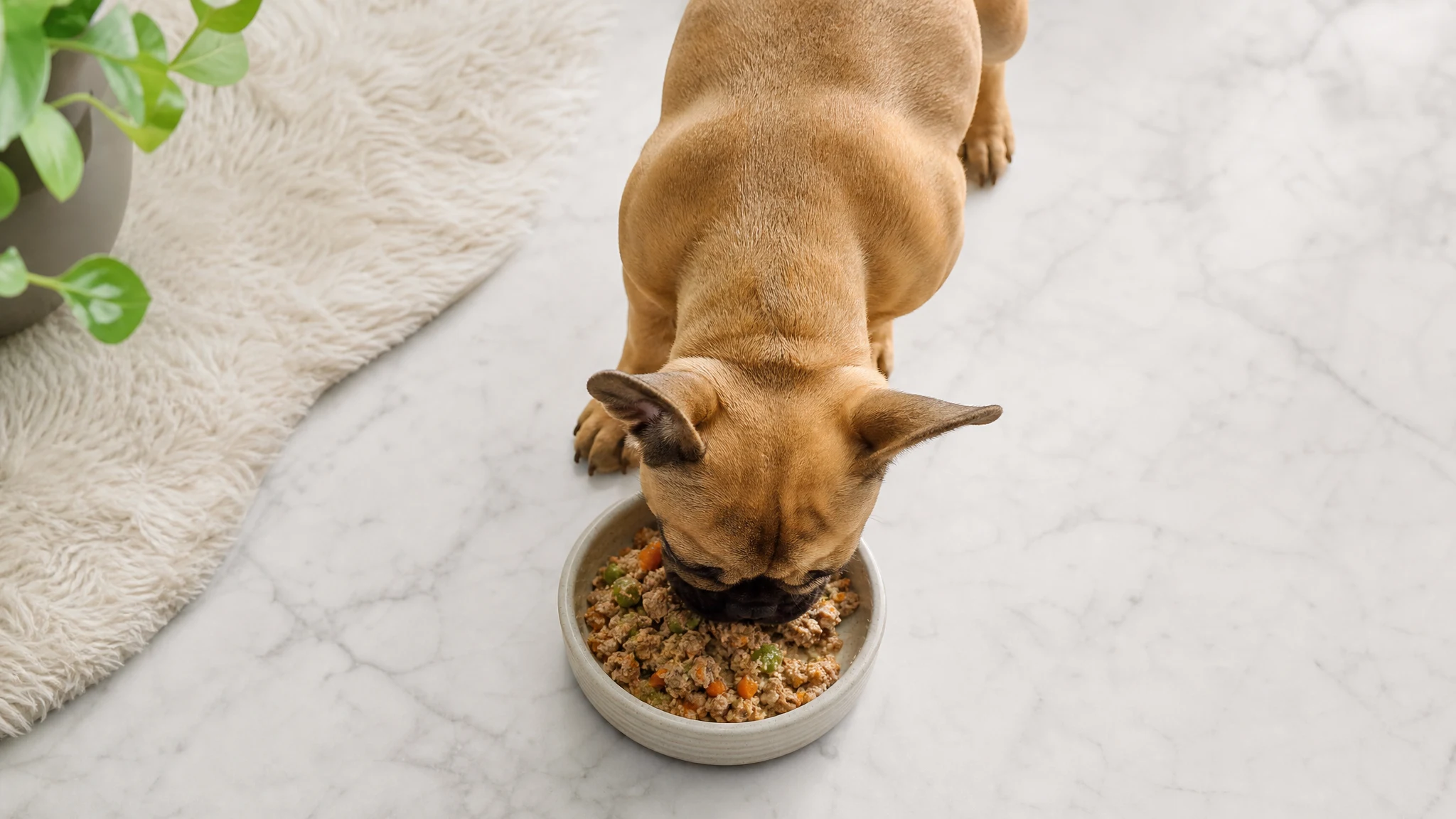
General nutrition information compiled from product labels and published sources, not veterinary advice. Your veterinarian is the right person to choose a diet for your dog, especially one with a health condition.
Bringing home a French Bulldog puppy comes with a wall of food choices and a lot of marketing. This guide walks you through French Bulldog puppy food one step at a time, using what the labels and breed sources actually say.
A note on method: we compared label data from brand pages. We did not run feeding trials or taste tests, and we have not fed any of these foods to a puppy. Treat everything here as a starting point for a conversation with your veterinarian.
What You Need Before You Start
- A puppy-formulated food. Look for a growth or all-life-stages statement on the bag or can.
- A standard measuring cup or a kitchen scale. Scooping by eye is a common way puppies end up over-fed.
- A shallow, stable bowl. A flat-faced puppy may find a deep bowl awkward.
- Fresh water, always available.
- Your puppy's current food. Ask the breeder or rescue what the puppy was eating, and keep some on hand for the switch.
- Your veterinarian's contact details. They decide what is right for an individual dog.
Step 1: Know Your Breed's Size and Life Stage
The French Bull Dog Club of America breed standard says a French Bulldog should not exceed 28 pounds. Royal Canin's breed library gives typical adult weights of 20 to 28 pounds for males and 17 to 24 pounds for females.
The same Royal Canin table lists the puppy stage as 2 to 12 months. After that, the adult stage begins. Many puppy foods on the market are written for about a year of growth, so this gives you a rough window.
This matters for one label detail. Since 2016, AAFCO has required growth and all-life-stages dog food labels to say either "including growth of large-size dogs" or "except for growth of large-size dogs," with 70 pounds or more as an adult. That is according to Whole Dog Journal's explanation of the rule. A French Bulldog is far below 70 pounds, so a food with the "except for" wording is not a red flag for this breed. A food with the "including" wording is not required either.
Step 2: Read the Label Like a Skeptic
Start with the nutritional adequacy statement. It is usually a small paragraph near the ingredient list. It tells you whether the food is formulated to meet AAFCO nutrient profiles or has been through AAFCO feeding tests, and for which life stage.
Here is what to check, in order:
- Life stage. You want "growth" or "all life stages."
- Large-size wording. As covered above, either version works for this breed.
- The first five ingredients. Ingredients are listed by weight before cooking, so this gives a rough picture of what the recipe is built on.
- Guaranteed analysis. Minimum protein and fat, maximum fiber. Some brands list only dry-matter averages instead, which are not directly comparable.
- Calories per cup. This is what lets you compare portions between foods.
Be wary of front-of-bag claims such as "premium" or "natural." They are marketing, not nutrition. The statement on the back is the part that counts.
Step 3: Compare a Few Real Labels
The table below uses data published on each brand's own page. It is not a ranking and not a recommendation. Some brands do not publish every number, so gaps are marked.
| Food | Form | AAFCO wording | Calories | Published analysis |
|---|---|---|---|---|
| Royal Canin Breed Health Nutrition French Bulldog Puppy | Dry | Growth, including large-size dogs | 373 kcal per cup (calculated) | Protein 28% min, fat 18% min, fiber 3.4% max |
| Victor Hi-Pro Plus Small & Medium Breed Puppy | Dry | All life stages, except large-size growth | 383 kcal per cup | Protein 30% min, fat 18% min, fiber 5% max |
| Hill's Science Diet Puppy Chicken & Brown Rice | Dry | AAFCO feeding tests, growing puppies | 390 kcal per cup | Dry-matter averages: protein 28.1%, fat 19.1%, fiber 2.7% |
| Freshpet Multi-Protein Puppy Recipe | Fresh | Growth | 241 kcal per cup (calculated) | Protein 16% min, fat 10% min, fiber 2% max |
A few things stand out when you read across the rows.
First, the numbers are not directly comparable across forms. Fresh food contains much more moisture than dry kibble, so its lower percentages do not mean it is lower in protein once water is accounted for. Hill's lists dry-matter averages rather than guaranteed minimums, which is yet another basis.
Second, only the Royal Canin product is made for the breed. Its page describes a curved kibble shaped for the French Bulldog's short muzzle and underbite. The page does not state a kibble size in numbers, and we cannot say how any individual puppy will handle it. The other foods are small-breed or general puppy formulas, and some brands do not publish kibble size at all. If kibble shape matters to you, check with the brand.
Third, a breed-specific name is a design choice by the brand, not proof that it suits your dog better. Both a breed formula and a general puppy formula can meet the same AAFCO standard.
Step 4: Think About Breed-Specific Concerns
French Bulldogs have a few health tendencies that can touch on feeding. None of them are a reason to pick a particular food on your own, but they are worth knowing before you talk to your vet.
- Flat-faced build. Royal Canin's breed library notes respiratory problems from the brachycephalic build, and links brachycephalic airway obstruction to gastrointestinal signs. If your puppy gags, regurgitates or struggles at mealtime, mention it to your vet.
- Weight gain. Royal Canin warns that the breed gains weight easily. That is one more reason to measure portions. Note that a UK VetCompass finding points the other way for some measures, so your vet's read on your own puppy's body condition matters more than a general rule.
- Skin and ears. The Royal Veterinary College lists skin fold dermatitis as a predisposition. A report on UK VetCompass data found high odds of skin dermatitis and ear discharge in the breed. Foods labeled for sensitive skin exist, but no label can promise to prevent a skin problem. A vet decides whether diet is even involved.
On grain-free diets: the FDA has investigated a possible link between certain diets and canine dilated cardiomyopathy (DCM). The agency's page is current as of 12/23/2022, and the FDA says it will not publish more public updates until there is meaningful new scientific information. If you are weighing a grain-free recipe, ask your vet about it rather than relying on the bag.
Step 5: Start With the Label's Feeding Guide
Every label chart is a starting point, not a prescription. Your puppy's age, target adult weight and activity all shift the real number.
For example, Royal Canin's French Bulldog Puppy page has a daily table by age (2 to 9 months) and target adult weight (18, 22 and 31 pounds). For a 3-month-old puppy with an 18 pound target, the table shows 1 1/2 cups (144 grams) per day. A French Bulldog under the breed standard would sit near the lower two targets, since 31 pounds is above the 28 pound cap.
Other brands do it differently. Victor's Hi-Pro Plus page describes feeding as much as the puppy will eat in 20 minutes, in four feedings spaced through the day. Hill's pages say to adjust amounts as needed to maintain optimal weight, and to ask your veterinarian if unsure. Because French Bulldogs gain weight easily, many owners prefer a measured amount over open-ended feeding. Your vet can tell you which approach fits your puppy.
Split the daily amount into the number of meals your vet or the label suggests. For more detail by age and weight, see our guide on how much to feed a French Bulldog puppy.
If your puppy has a health condition, confirm amounts with your vet before following any chart.
Step 6: Switch Foods Gradually
If your puppy is already eating something else, do not swap it all at once. A sudden change can upset a puppy's stomach, and this breed's tendency toward digestive signs is one more reason to go slowly.
- Days 1 to 3: Mostly the old food with a small amount of the new one mixed in.
- Days 4 to 6: About half and half.
- Days 7 to 9: Mostly the new food with a little of the old.
- Day 10: The new food only, if stools and appetite look normal.
This is a common general approach, not a rule from any one brand. If your puppy has loose stools, vomiting or refuses to eat, slow down and call your vet. Keep the total daily amount steady while you mix.
Step 7: Watch, Measure and Adjust
Once your puppy is settled on a food, check in on a regular schedule.
- Weigh your puppy on a regular schedule and note the number.
- Feel along the ribs. You should be able to feel them under a thin layer of padding.
- Watch stool quality, energy and coat.
- Bring your notes to every vet visit and ask whether the portion needs to change.
Puppies grow fast, so the amount that fits at 8 weeks will not fit at 5 months. A vet can adjust it for your individual dog.
Tips and Common Mistakes to Avoid
- Judging by the first ingredient alone. The whole label matters, including the AAFCO statement and calories.
- Using a large-breed puppy formula by default. A French Bulldog's adult weight is well under the 70 pound line, so this is not needed.
- Feeding by eye. Use a measuring cup or scale.
- Ignoring treats. Treats and training rewards count toward the daily total. Ask your vet how much room to leave for them.
- Adding supplements on your own. A complete puppy food is formulated to be balanced. Ask your vet before adding anything, and do not guess at amounts.
- Switching too fast. Give each new food time, and use the gradual switch above.
- Using a food meant for another life stage. Adult formulas and puppy formulas are built differently.
- Treating a food as a cure. No food prevents or treats hip problems, allergies, skin trouble or heart disease. A veterinarian decides what a particular dog needs, and prescription diets are only something a vet prescribes.
What to Expect
With a complete and balanced puppy food, measured portions and a slow switch, many puppies settle into regular meals and steady stools within a couple of weeks. A steady weight gain that your vet is happy with is a reasonable sign the plan is working, though results vary from one puppy to the next.
Ear, skin or digestive problems can have causes unrelated to food, and a new diet may or may not make a difference. If something does not look right, ask your vet instead of changing foods again and again.
Plan to revisit the food around the end of the puppy stage. Royal Canin's life-stage table puts that at about 12 months, but your vet can tell you when your own dog is ready for an adult formula.
Sources
- French Bull Dog Club of America, French Bulldog Breed Standard
- Royal Canin US breed library, French Bulldog
- Royal Canin, French Bulldog Puppy Dry Dog Food
- Victor Pet Food, Hi-Pro Plus Small & Medium Breed Puppy
- Victor Pet Food, Hi-Pro Plus
- Hill's Pet, Science Diet Puppy Chicken & Brown Rice Recipe
- Freshpet, Multi-Protein Puppy Recipe
- Whole Dog Journal, In the Fine Print: Nutritional Adequacy Statements
- Royal Veterinary College, French Bulldogs: VetCompass reveals top health problems
- Phys.org report on O'Neill et al., Canine Medicine and Genetics
- FDA Center for Veterinary Medicine, DCM investigation